A fascinating history of some of the zaniest technologies used as computer memory across the ages, from relays to mercury delay lines, spring wire to selectron tubes…
8 Likes
What’s particularly lovely about the Selectron is that it doesn’t work very well. RCA were at the absolute height of their technical prowess. They saw the Williams tube — bulky and power-hungry, but mostly reliable — and thought they could do so much better. It turns out that years of practical experience refining the Williams tube can beat technological hubris, and the Williams tube kept being used in applications where the Selectron was supposed to replace it.
Likely disqualified from your article is shift-register memory, because it’s sequential rather than random. It’s basically a solid-state drum memory, one bit wide. It saw some use in small systems before RAM chips were available/affordable.
2 Likes
If mercury delay lines and twisting wires count, I don’t see why shift-register memories shouldn’t. The only design I studied in detail with such a memory was the Kenbak-1, but it was also used as a frame buffer in the Apple 1. I think Don Lancaster’s TV Typewriter used them as well, at least initially. I once had to use a later single board version of that but didn’t notice if SRAMs had replaced them. The project was in 1982 but the board had been sitting in the lab for some years so I don’t know when it had been made.
Intel’s position as the key supplier of shift-register memories used by Datapoint was what got them invited to do a once chip version of their processor, resulting in the 8008.
4 Likes
Intel had the fastest 16x4 ram in the late 1960’s.
1 Like
Here’s a question that can only be answered by people who were listening at the time, you’re not going to find this one on Google:  Tell us about Bart Khan’s memory device that fit in a 6-in cube…
1 Like
O gosh, I think I remember this like it was yesterday. Bart developed a 3D memory technology based on the Charged Coupled Device. It was 4x denser than IBM’s highest density storage. I think Bart called it Charged Packet Memory. Didn’t he start a company called Micro Xeno?
OK, I’m joking about the remembrance, but am I close to being right? I found this on Google:
No You Khan’t ⋆ Electronics Weekly
If this is it, my Google search was aided greatly by my very recent efforts at playing with Fairchild’s CCD shift registers, these frustrating beauties:
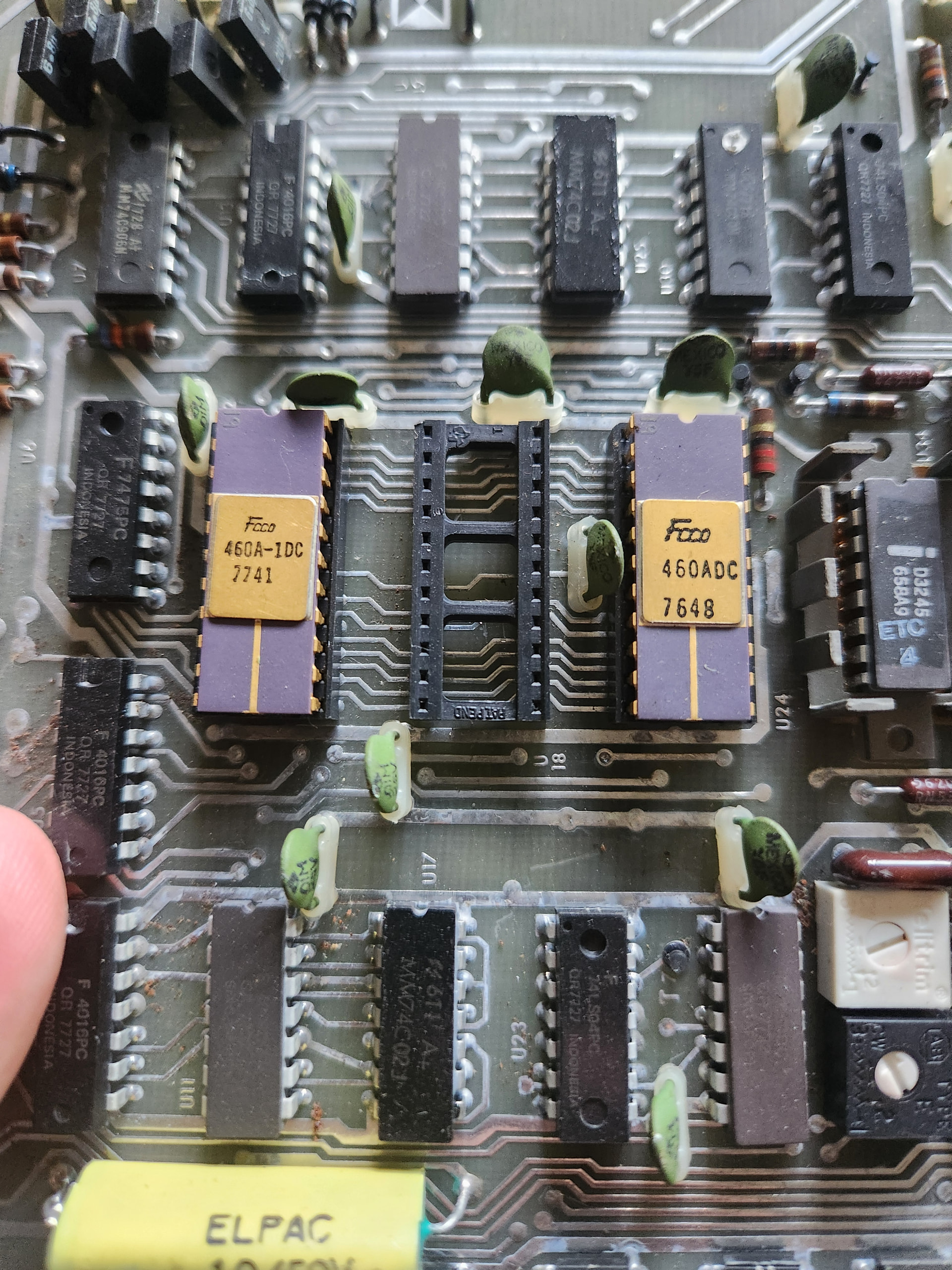
The history of computer memory technology has been one of my overriding passions in life.
-Paul
Yep, that’s the guy. It was a huge scam - I was working at Acorn at the time and all the techies could see immediately that something employing “fuzzy logic” could not store the amount of data he claimed even with compression (unless it was highly lossy compression, but this was claimed to be real storage so clearly not, and this was in the early days of compression algorithms which weren’t very good yet.) It was bullshit aimed at scamming funding from people (managers and financial people) who didn’t know any better. (Mind you, techies were somewhat gullible back then too - remember when Max Headroom came out, we were amazed by the number of people who thought it was real, who really should have known better! It was clearly a guy in a mask and some mild digital filtering to make it look less realistic.). Khan dropped off the map and none of the contemporary articles about his 6in cube have ever appeared online, I suspect down to embarrassment by the publishers who fell for the scam.
1 Like
Ah - now you explain - was this described as storage in the size of a biscuit tin? I think I remember that.
1 Like
There is something about the brazenness of hardware scams like this; the how long can they go on without being found out? audacity which is the only thing that holds their idea together. It reminds me of the early full-motion video company whose demos required the company’s own suspiciously bulky power cables to work at all. The company’s power cables hid an analogue composite video signal, so none of their digital trickery was real.
Even honest attempts at wafer-scale integration didn’t really work. Remember Anamartic? They actually brought a product to market before disappearing. All from the late crank/visionary Ivor Catt.
Oh, I thought Anamartic were legit, it’s just that the market wasn’t there? (And a Sinclair connection too)
I thought there was a nice consumer friendly plastic package too but it’s not beautiful:
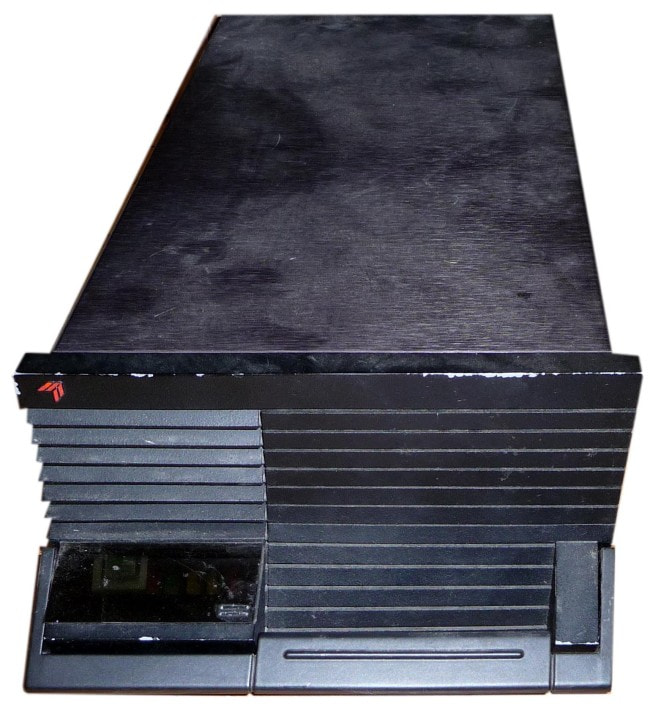
(from CCH page)
Edit: ah, maybe this
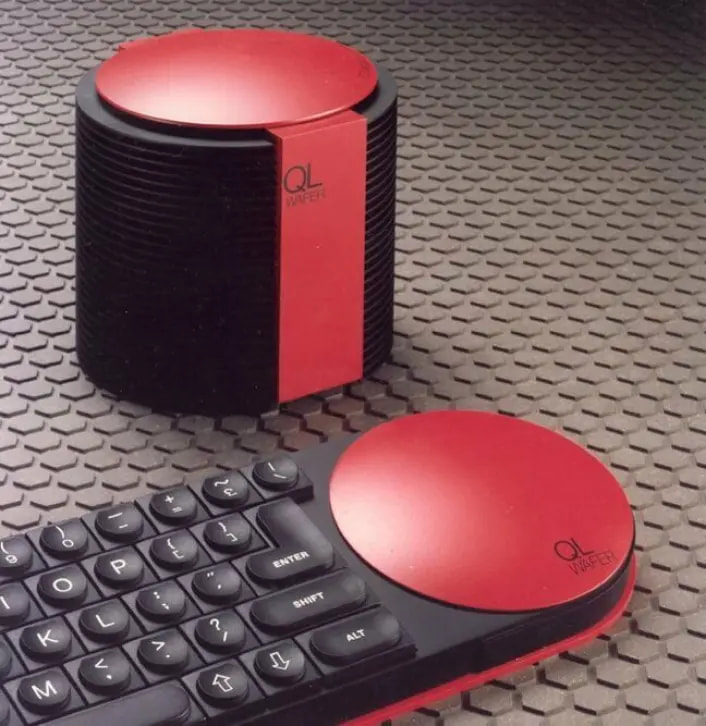
(from the register article, a Rick Dickson mock-up)
1 Like
They were legit, in their first product, at least. Yields are what killed them.
I don’t know much it was hindered by Catt himself. Back in the 1980s he was described as a “colourful” character. Digging deeper doesn’t give a glowing picture of him.
1 Like
For legitimate company attempts at things like wafer scale integration I think the question for brazen technical projects is how long can we go on without running out of money? The industry was desperate for technical solutions, which bred both heroic attempts and scams. Gene Amdahl and his Trinity wafer scale efforts along with Cray 3 packaging methods highlight how stuck the industry was at the high end of performance, physical limits and all. I have a VHS of Seymour Cray’s talk at the introduction of the Cray-1 where he laments how much memory technology lagged behind the logic. He expressed skepticism of bubble memory and didn’t know how it was going to be resolved. The efforts and failures at filling the 3 to 4 orders of magnitude memory gap speed and density between disks and ram are also fascinating to read.
I think Graham’s mention of “fits in a 6-inch cube” hits at a common theme for projecting technology. Saying what can be accomplished within a 5" cube was common in technical articles (along with the ubiquitous “pack of cigarettes” sizing). The common 5" cube “standard” fits in the palm of one’s hand, approximates the volume of the human brain, and provides a 1 nanosecond propagation delay from corner to corner of the space diagonal using Teflon insulated copper. Not sure how much of these properties are coincidental to the size standard’s use.
2 Likes
I had never heard that Anamartic had problems with yield. I design wafer scales myself and am very interested in this kind of detail.
The story I am familiar with was that after many years of relatively stable prices hard disk capacity suddenly started growing at an exponential rate (20MB → 30MB → 80 MB …). This made investors pull out since they no longer saw any value in the disk replacement application.
1 Like
The original article mentions the Zuse Z3 relay memory, but skips its precursor, the mechanical memory of the Z1. It is demonstrated in this 3D-printed model: https://www.printables.com/model/69647-zuse-z1-z2-z4-type-memory-cell-demonstration-set.
2 Likes