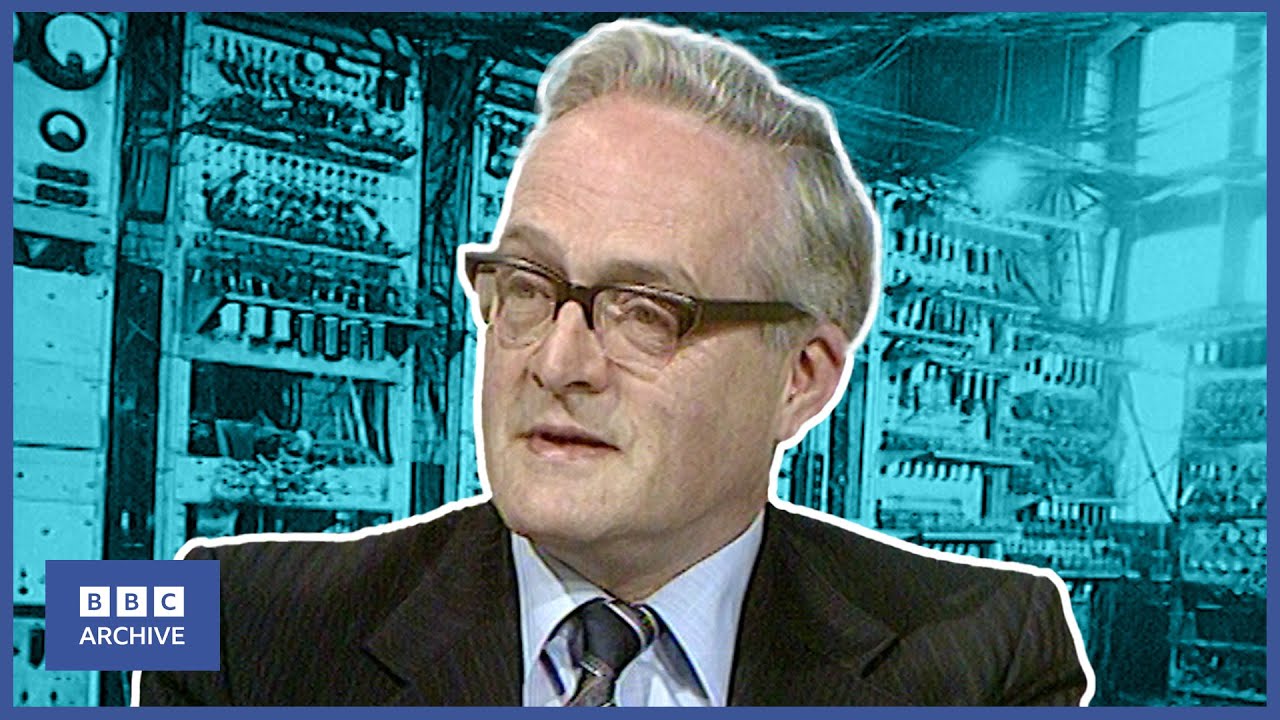
An interesting BBC interview with Tom Kilburn, recorded in 1981:
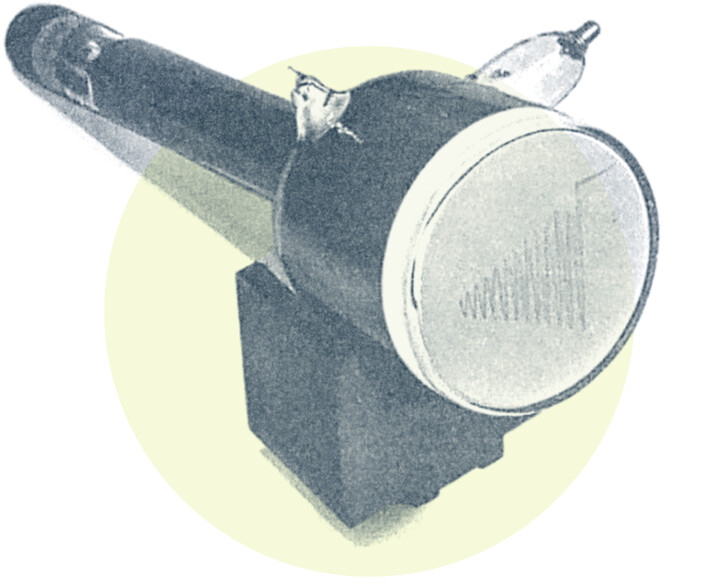
What I found personally interesting is the story of the Williams-Kilburn tube, right at a beginning. A few years ago, I speculated that there may be a connection between the dark trace CRTs, in the US known as Skiatron, and the Williams-Kilburn tube, since both depend on the secondary emission of the phosphor as a working principle. And, indeed, according to Tom Kilburn, Freddie Williams was inspired by seeing a CRT used for radar applications that stored analog data during a post-war visit to the US. Chances are, this would have been a Skiatron, as its principal use was both as a radar display and as a transient storage tube. (It may be a bit ironic that this took a detour to the US, since the dark trace CRT was a German invention that was refined in the UK just before and during the war, where it was used for large scale RDF/radar displays.)
Skiatron, and the Williams-Kilburn tube, since both depend on the secondary emission of the phosphor
Skiatrons do not rely on secondary emission, and there is no stored charge so there’s nothing to pick off - ie, you couldn’t use it as the basis of a memory.
I suspect what Williams saw was a “real” storage tube of the tektronix type? That does indeed use secondary emission and there is a stored charge, so that seems more likely.
I guess, since Tectronix was only founded in 1946, this would have been a bit too late.
Citing my blog post on the matter regarding the working principles of dark trace displays:
Technically, free electrons in the alkali-halide crystals are displaced by the cathode beam and secondary emission electrons take up positions in the faults of the crystal lattice, vibrating at frequencies corresponding to certain wavelengths. And it’s this virbration, which causes the absorption of those wavelengths, resulting in dark traces on the semi-transparent crystal layer. The apparent color of the display is the complementary color of the absorbed wavelengths, pink for potassium chloride (absorbing the green ranges of the spectrum), or brown for potassium bromide (absorbing more in the bluish range.) Under the bombardment of light or heat, the electron holes in the crystal lattice are eventually closed again, with the screen reverting to its original semi-transparent state. However, in absence of such an irradiation, the excited areas of the screen will remain in the absorbent state, preserving the dark traces.
Meaning, the (often unwanted) storage aspect depends on environmental factors, but is certainly a thing, which is also why it wasn’t suitable for television (which is what the BBC had gone for in the first place). And secondary emission is crucial to the working priciple.