I have a Sharp Compet desktop calculator from 1969 that has nixies. It does not, however, feature programming cards. That seems more like an HP thing.
It does have some kind of logic interface on the back, but I have no documentation for that.
I have a Sharp Compet desktop calculator from 1969 that has nixies. It does not, however, feature programming cards. That seems more like an HP thing.
It does have some kind of logic interface on the back, but I have no documentation for that.
I have an Anita Mk10 from the 60s. Not programmable. It has Nixies and a Decatron. However it’s non working and in a poor state of repair. Maybe one day I’ll resurrect it.
-Gordon
I have an HP 97 with a mag card reader, but it has an LED display. I’m not sure there were any HPs with both nixie tubes and mag cards, by the early 1970s (when the programmables started appearing) the displays were almost all LED.
I have a few Rockwell 920s, they have printers and magnetic cards and a lot of program steps. I have a PC1300, that also has a printer and magnetic cards. The paper on that one uses the the metalised paper, though, which is tricky to find. I also have a Casio PRO FX-1 which uses magnetic cards. The Casio and Sharp have hand-powered card readers, which is more reliable than the motorised version, they just work, really. None of these are nixie tube displays, though, the Rockwell is panaplex and the rest are VFD.
I just remember using them, and they were big scientific monsters.Nice to see other vintage calculators
out there.
The Rockwells are big, yes. I have a Monroe 9820 as well, and some PC1001s. All PPS4 processors.
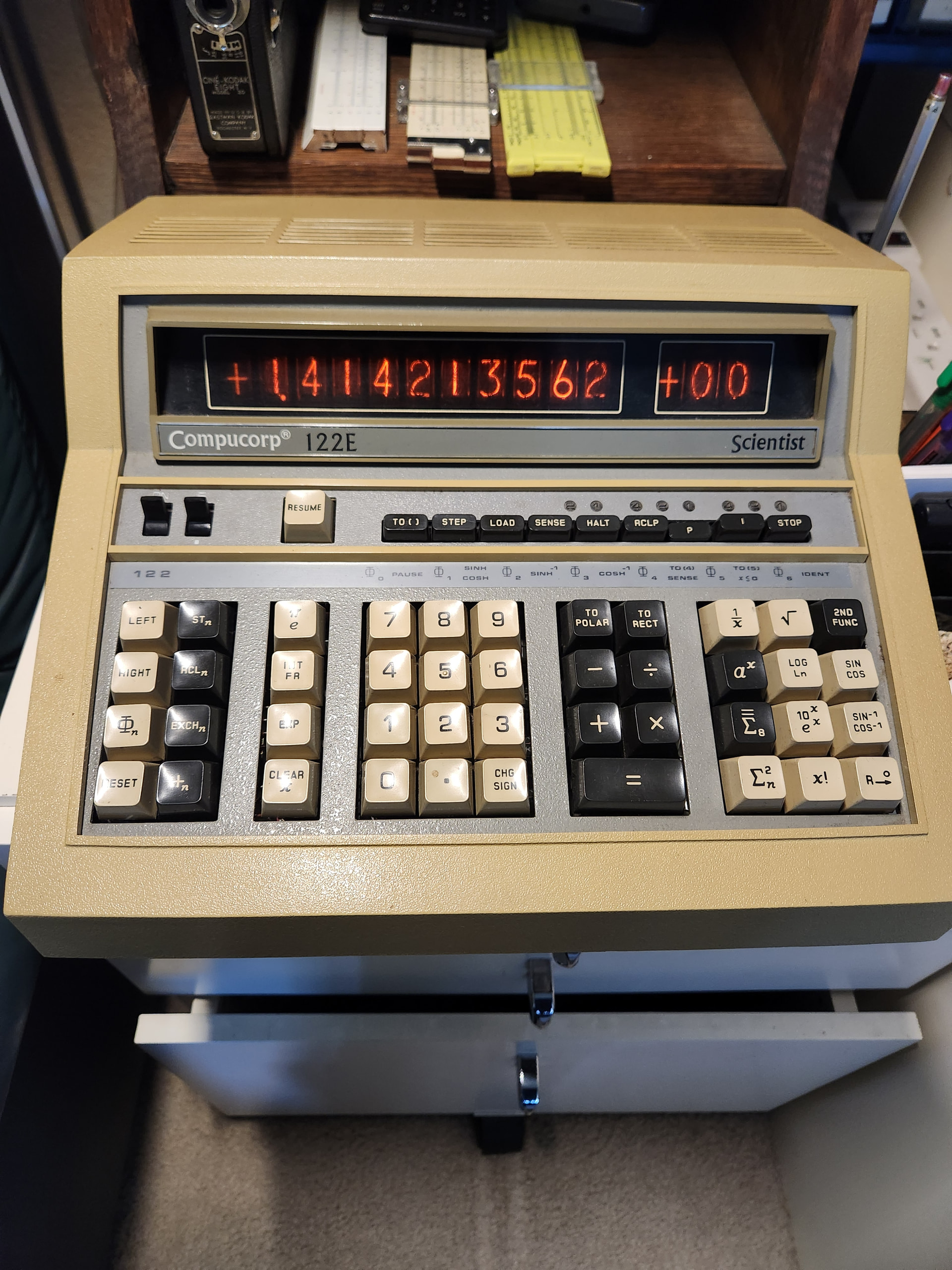
Yes, I routinely use my nixie-based Compucorp Scientist 122E desktop. It is keypress programmable similar to the early HP and TI calculators:
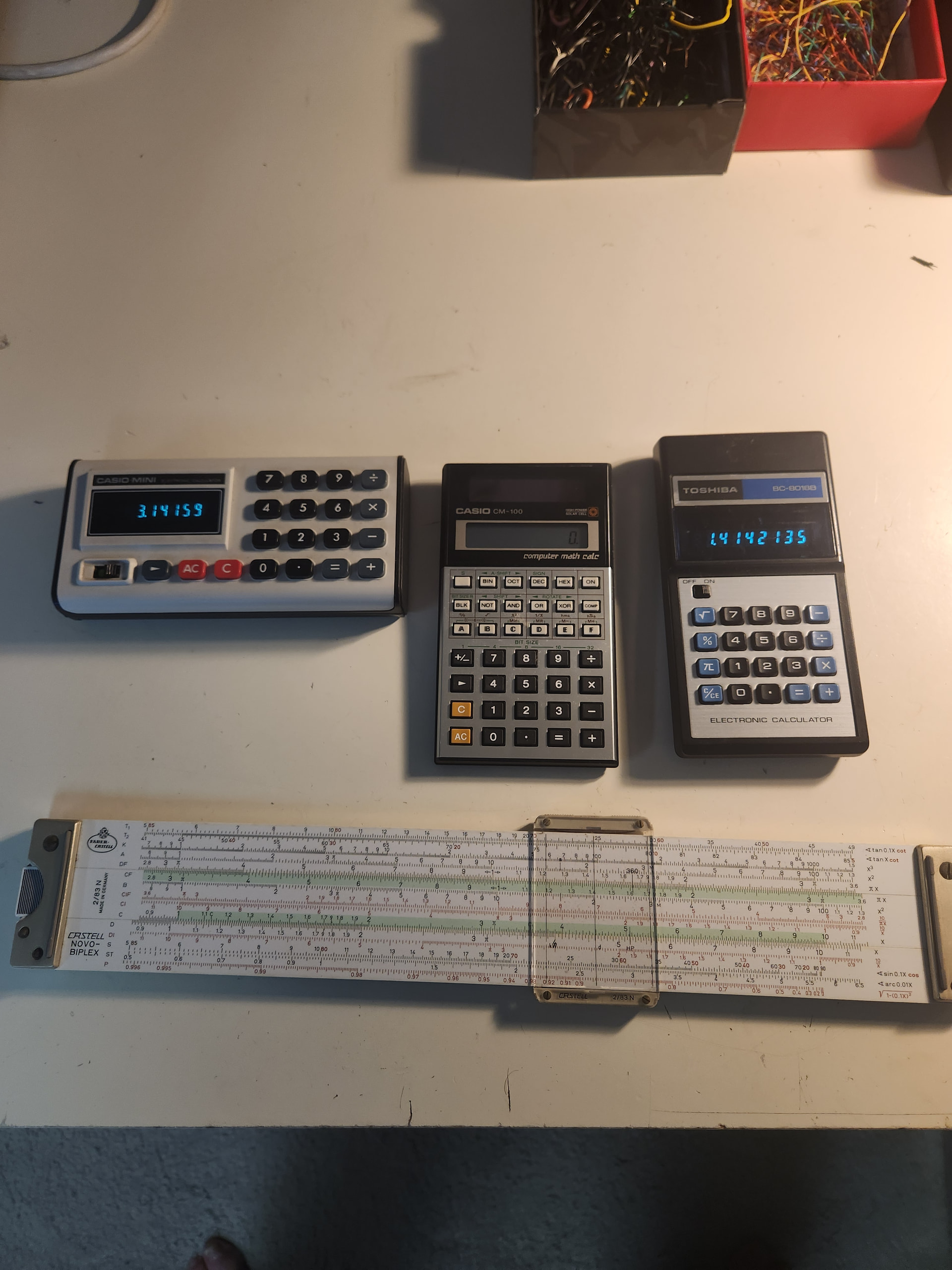
I also use several calculators because of their unique display or shape. The Castell Novo-Biplex monster, considered the ultimate in linear rules, is hand-powered, unlike the Casio CM-100 solar computer math calc which has been my companion mostly for hex conversion and offset calculations when doing hand assembly.
Oh, that CM-100 is special!
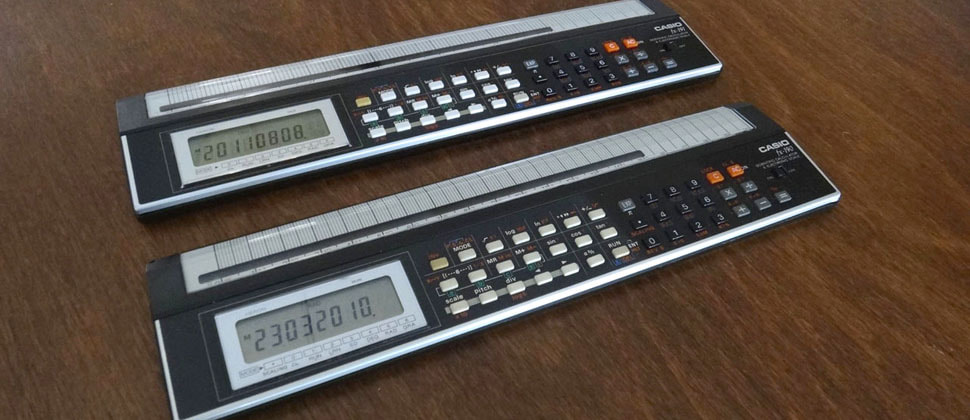
Have you seen the Casio FX-190, talking about rules?
Oh my, No! Now I want one…
Did you see that there are two? The FX190 and the FX191. One is in mm and one in inches.
And the LCD marks along the ruler?
The scientific keys are reminiscent of the FX502P, the whole thing is quite exquisite. It can perform calculations and then put the result on the LCD bars that run the length of the ruler.
Remarkable! From curtamania:
The 24-scale Novo-Biplex is indeed a monster. I inherited a Hemmi/Post Versalog 1460, with a mere 23 scales, and it’s an utter bear to work with even with the full hardbound manual at hand. TBH, I find the simple Ricoh 102 student slide rule (which a seller on ebay had a whole load, new in box, still wrapped) much easier to use. But it lacks the belt-mounted slip-stick scabbard that the Versalog came in.
I wasn’t sure if this should be posted to the Aesthetics topic from a short while back, but I recently repaired yet another vintage beauty:
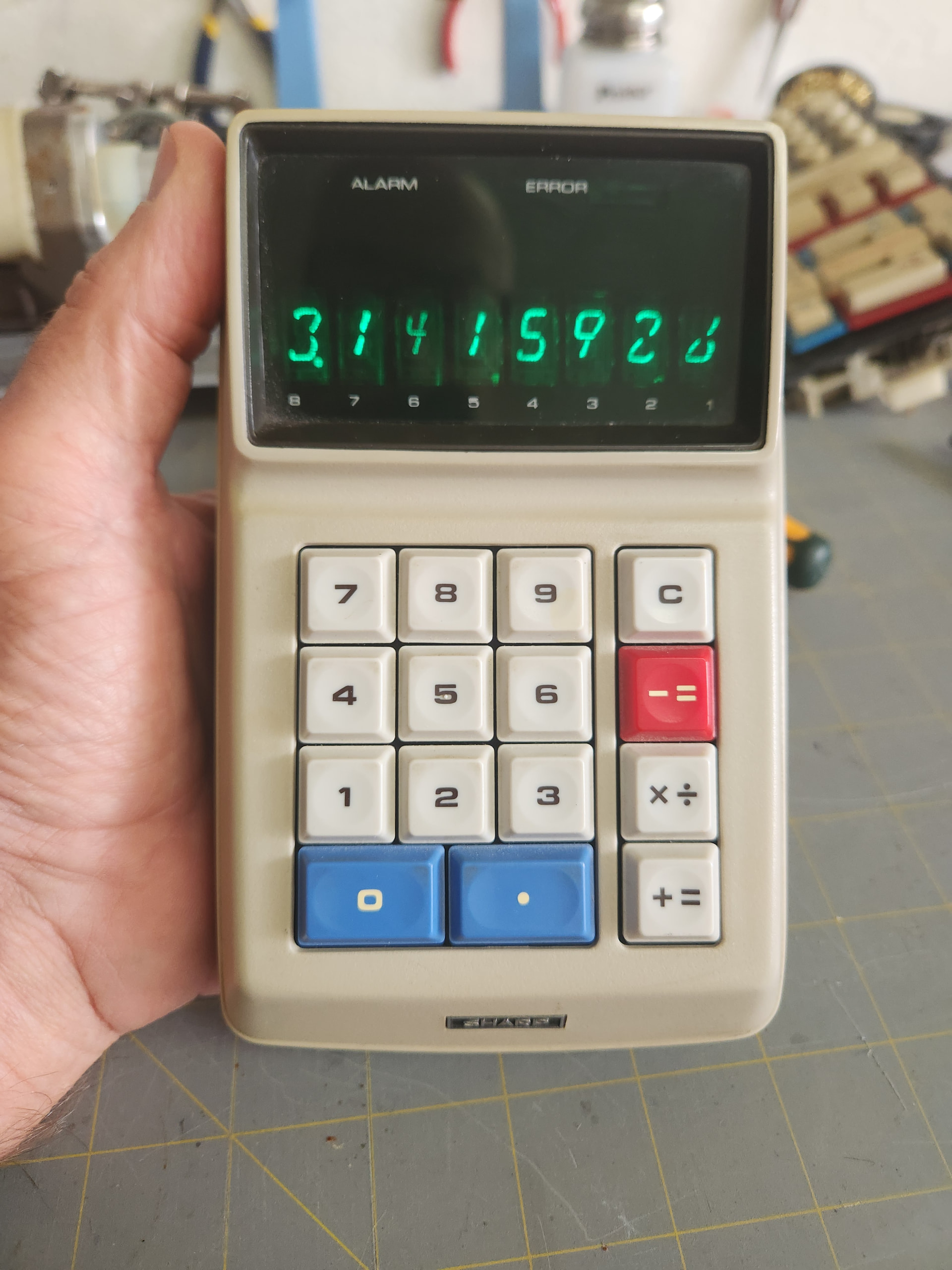
A 1970 Sharp EL (ELSI)-8 with 8-segment vacuum fluorescent display. This at an initial price of $345 was way outside my lawn mowing and paper route budget. The handwritten script style of the itron display tubes has taken me a while to get used to, and I alternate simple arithmetic use with my Casio mini, which also had an unusual “half-zero” numeric font in the VF display.
The use of these vintage devices has two benefits; the first being pure nostalgia but useful fun, and the second being able to possibly quickly identify issues so I can mitigate failures from battery leakage et al via constant, periodic use.
One of the things that I like about these is the small scientific keys that seem.to have been lifted from the fx502.